Bio Catalyst
Lake Management Experts Driving Sustainable Solutions
Lakes across the UAE and the Middle East, whether natural or man-made, play a vital role in enhancing biodiversity and enriching local ecosystems. Beyond their ecological value, they also boost eco-tourism and strengthen community well-being. When thoughtfully integrated into urban landscapes, these water bodies provide recreational spaces that bring people together while encouraging more sustainable ways of living. Moreover, through smart water management and alignment with SDG 6, they stand as practical examples of how cities can balance progress with environmental responsibility—proving that even in arid regions, harmony between development and nature is achievable.
Challenges
Key Factors in Lake Health
Nutrient Loading: Elevated concentrations of nutrients—particularly nitrogen (N) and phosphorus (P)—arising from landscape runoff are key drivers of eutrophication. Over time, sediment becomes a long-term nutrient reservoir, gradually releasing N and P through mineralization. This continuous release further fuels algal blooms and destabilizes aquatic balance.
Environmental Factors: As water temperatures rise, metabolic activity within algae accelerates, while oxygen solubility declines, collectively fostering hypoxic conditions. In addition, the absence of a well-developed food web—especially a lack of zooplankton grazers—removes a critical natural control, allowing phytoplankton populations to expand unchecked.
Organic Loading and Odor Production: The unchecked growth of phytoplankton ultimately increases organic matter deposition to the lake bed. Consequently, as this material decomposes anaerobically at the sediment-water interface, it produces hydrogen sulfide (H₂S) and other volatile organic compounds (VOCs). These by-products not only degrade water quality but also generate unpleasant and often persistent odors.
Ineffective Treatment Methodologies: Many current management practices take a reactive approach, focusing primarily on symptoms rather than root causes. For instance, the use of algicides may provide temporary relief but does little to correct the fundamental nutrient imbalances. In some cases, such interventions even disrupt natural biogeochemical cycles, worsening long-term ecological instability.
Moving Forward: Addressing these interconnected challenges therefore calls for an integrated, proactive strategy—one that prioritizes nutrient load reduction, promotes ecological restoration, and embeds sustainable water management practices at every level.
Solutions
Redefining Water Quality Responsibly
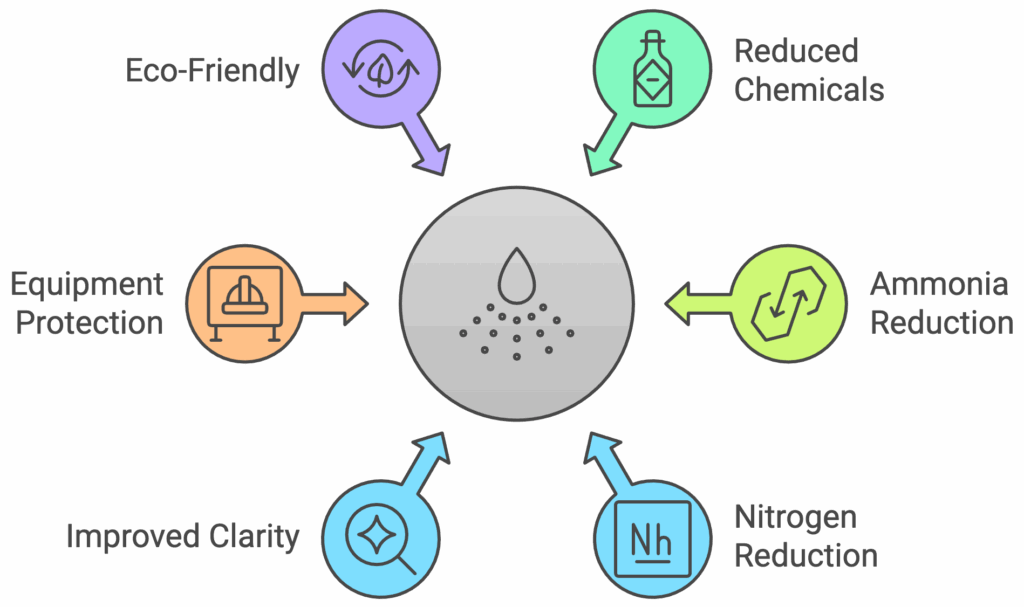
At the core of our offerings lies Clear-Cat™, a patented solution specifically engineered to restore and maintain water quality. By naturally enhancing oxygen levels and reducing harmful organic buildup, it helps revive aquatic ecosystems from within. Around this core innovation, we’ve built a complementary set of proven tools that extend its impact—ranging from advanced odor control systems to tailored lake and lagoon management programs. Together, these solutions form an integrated, end-to-end approach to sustainable water and environmental care, ensuring long-term balance, clarity, and ecological resilience.
Lake Management
Document
Frequently Asked Question:
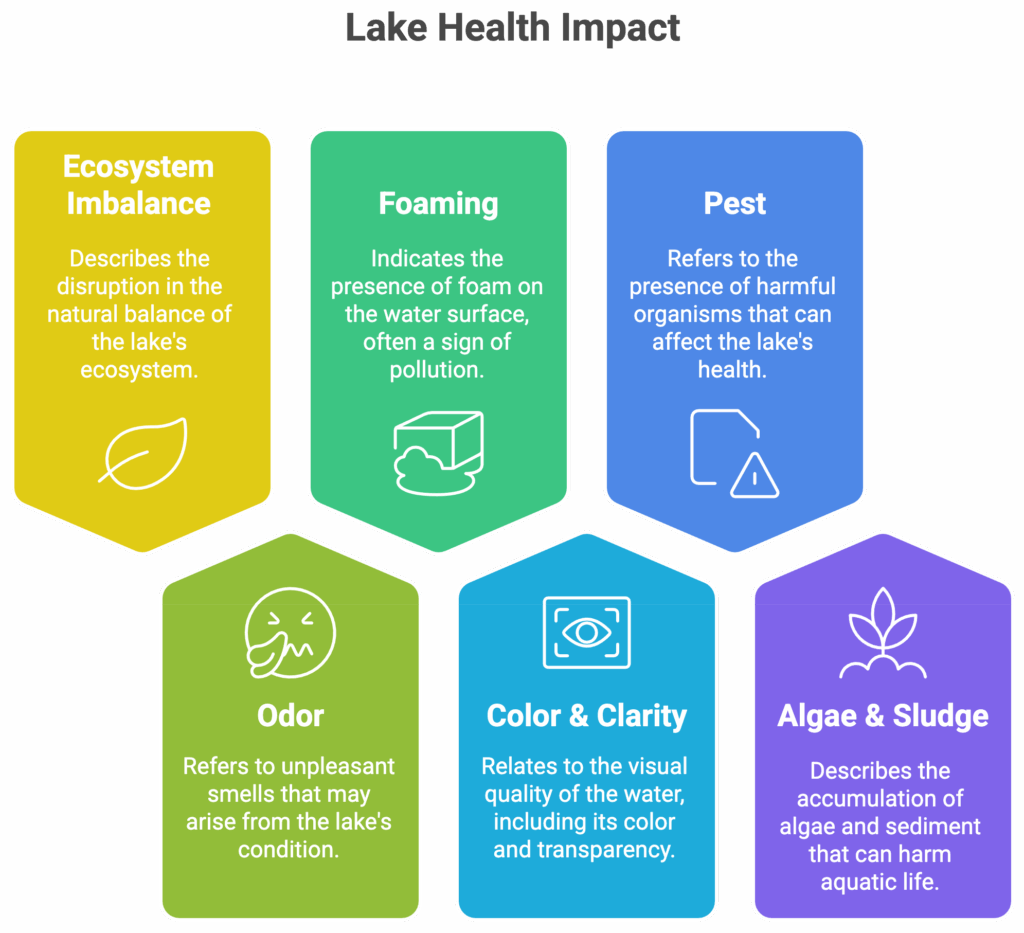
Lakes provide recreation, habitat, and water resources but can suffer from poor water quality, algae blooms, and foul odors if not properly managed. Technically, unmanaged lakes often experience eutrophication, where excess nutrients cause oxygen depletion, harming aquatic life and ecosystem balance.
Common issues include nutrient overload (nitrogen, phosphorus), harmful algal blooms, sludge accumulation, unpleasant odors, and oxygen depletion. From a scientific viewpoint, these lead to hypoxic zones, accumulation of organic sediments, and proliferation of cyanobacteria like Microcystis, impacting water usability and biodiversity.
Clear-Cat boosts oxygen levels in water, which supports beneficial aerobic bacteria that break down organic waste and reduce nutrients feeding algae. On a technical level, it increases dissolved oxygen (DO) through nano-bubble technology, enhancing microbial oxidation and preventing anaerobic conditions that produce toxins and odors.
Yes. By reducing available nutrients and oxygenating the water, Clear-Cat™️ limits the growth of harmful algae and cyanobacteria. The process disrupts phosphorus cycling and encourages microbial competition, limiting bloom formation and improving overall ecosystem health.
Odors mainly arise from anaerobic decomposition producing gases like hydrogen sulfide. Clear-Cat increases oxygenation to suppress anaerobic bacteria and oxidizes odor-causing compounds, leading to fresher, cleaner-smelling water.
Aerators and water circulators physically mix water layers, preventing stagnant zones where low oxygen and nutrient buildup occur. When paired with Clear-Cat, aeration improves oxygen distribution and supports microbial activity across the entire water column, enhancing treatment effectiveness.
Absolutely. Clear-Cat is non-toxic, biodegradable, and compliant with environmental regulations like EPA and USDA standards, ensuring safety for fish, plants, and wildlife.
Users often see clearer water and reduced odors within weeks, with longer-term improvements in algae control and sludge reduction over months. Effectiveness depends on lake size, nutrient load, and ongoing management practices.
Yes. Clear-Cat and its complementary tools are adaptable for natural lakes, reservoirs, retention ponds, and man-made lagoons. Formulations and deployment strategies can be customized based on water chemistry and ecological conditions.
Clear-Cat serves as a core component by enhancing water quality biologically. When combined with physical management like dredging, vegetation control, and aeration, it supports a holistic, sustainable lake care approach.
Trusted Clients: